Thursday, October 12, 2023
Thousands of state lawmakers and advocates, researchers, and practitioners heard which states did the most to help young children and their families thrive in 2023, and learned about the newest research informing prenatal-to-3 evidence-based policymaking.
Recording
Skip ahead and go directly to your topic of interest:
0:00 – Introduction and the Science of the Developing Child
11:10 – Policy Impact Calculator: Thriving Together
20:42 – How Our 12 Roadmap Policies Align with 8 Prenatal-to-3 Goals
26:21 – Panel: Three States’ Transformative Actions
59:18 – Championing Change: Celebrating States’ 2023 Legislative Victories
1:22:08 – Paving the Path Forward: Prenatal-to-3 Policy Insights for 2024
*You can also hover your mouse over the video timeline to jump to these topics.
Speakers
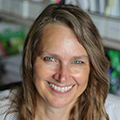
Debra Fitzpatrick
Director of Policy and Research, Children’s Defense Fund-Minnesota
As Director of Policy and Research, Debra collaborates with legislators, coalitions, partners and community to advance research-based policies that ensure every child has a Healthy Start, a Head Start, a Fair Start, a Safe Start, and a Moral Start in life. She received her Master’s Degree in Public Affairs and her Bachelor’s Degree in Political Science from the University of Minnesota.

Matt Gross
Assistant Secretary of Government Affairs, North Carolina Department of Health and Human Services
In his role at DHHS, Matt has led negotiations on numerous topics including Medicaid expansion, Medicaid managed care transformation, behavioral health reform, early childhood education, COVID-19 relief packages, and clean water policies. He holds a master’s degree in social work with a concentration in administration, planning, and public policy from Virginia Commonwealth University. He also has a bachelor’s degree in psychology from North Carolina State University.

Cynthia Osborne, PhD
Executive Director and Founder, Prenatal-to-3 Policy Impact Center, Vanderbilt University
Dr. Osborne is an appointed member of the National Academies of Sciences Committee to Reduce Child Poverty by Half in Ten Years. Osborne has extensive experience leading long-term evaluations of state and national programs, with the aim of helping organizations understand what works, and how to ensure sustainable implementation of effective policies.

Aly Richards
CEO, Let’s Grow Kids
Let’s Grow Kids is a statewide organization leading the campaign to solve Vermont’s child care crisis by 2025. This year, Aly and Let’s Grow Kids, along with the 40,000 supporters who make up Vermont’s Child Care Campaign, made history by passing the 2023 Child Care Bill (now Act 76) into law. This comprehensive new law is not only a first-of-its-kind for Vermont and the nation, it also changes the trajectory of the state through long-term, public investment in our state’s child care system.
Follow @pn3policy
Follow us on Twitter at @pn3policy and join the conversation at #pn3policy.