Lorem ipsum dolor sit amet, consectetuer adipiscing elit, sed diam nonummy nibh euismod tincidunt. Learn More

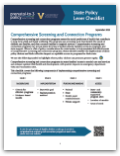
State Policy Lever Checklist: Reduced Administrative Burden for SNAP

PRINT

­­­­Reducing the administrative burden for the Supplemental Nutrition Assistance Program (SNAP) increases participation rates among eligible households, increasing household food security.  

This State Policy Lever Checklist contains a list of policy considerations for state leaders to help maximize the effectiveness of SNAP. It also underscores the implications of these policy choices and their collective impact on equitable access to SNAP for eligible families in their state.

This checklist covers the following policy levers, which can impact the administrative burden for SNAP:

  • Recertification
  • Reporting requirements
  • Online services
  • Maximizing benefits

State Policy Lever Checklist: Reduced Administrative Burden for SNAP

Related

Baby held close to their mother's chest

Effective Early Childhood Governance: Lessons Learned from Governance Change

Governance change does not happen overnight, and states rarely accomplish it alone. Drawing on case studies of five states that consolidated their early childhood systems, a new brief from the Prenatal-to-3 Policy Impact Center identifies seven lessons learned, from sustained advocacy to strong, collaborative leadership, that can help state leaders pursue governance change reflecting their own early childhood goals.
Little girl smiling

Early Childhood Governance Typologies: Patterns in State Governance Across the Nation

State choices in early childhood governance shape whether families can easily find, access, and use the services their children need. A new brief from the Prenatal-to-3 Policy Impact Center maps how all 50 states and the District of Columbia organize these systems, identifying three governance typologies (whole child, school readiness, and parents' workforce participation) to help leaders align governance structure with their early childhood goals.
Mother holding baby close to her chest after delivery

New Research on Medicaid Work Requirements Highlights the Importance of State Policy Choices

As states implement new federal work requirements under OBBBA, several policy choices can help minimize unnecessary coverage loss.