Lorem ipsum dolor sit amet, consectetuer adipiscing elit, sed diam nonummy nibh euismod tincidunt. Learn More

State Leaders Convene in Nashville for Prenatal-to-3 Policy Impact Center’s State Policy Academy on Early Childhood Governance

State Leaders Convene in Nashville for Prenatal-to-3 Policy Impact Center’s State Policy Academy on Early Childhood Governance

PRINT

Three-day academy brought together state teams and national experts to examine how governance structures can improve outcomes for young children and families.

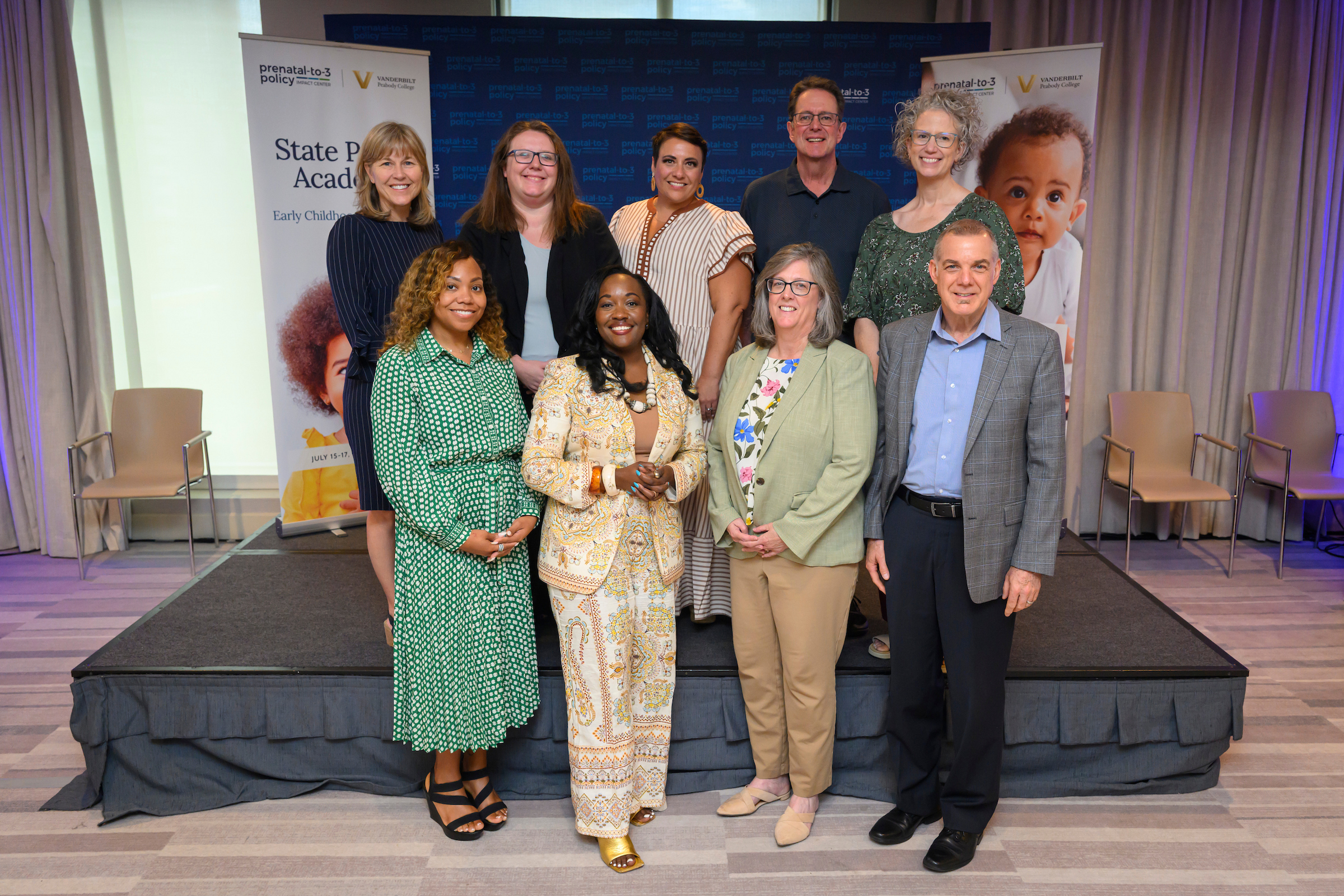
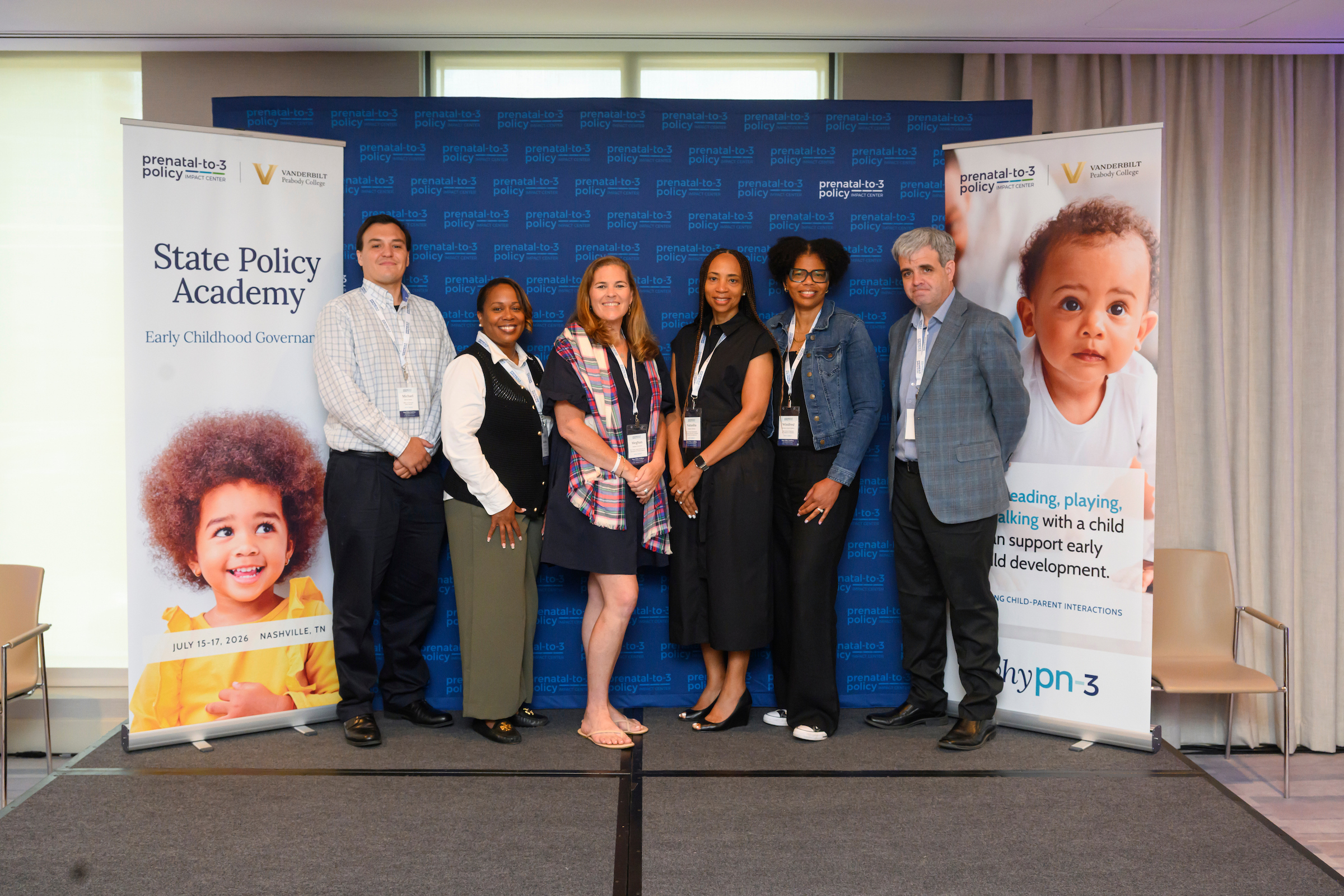
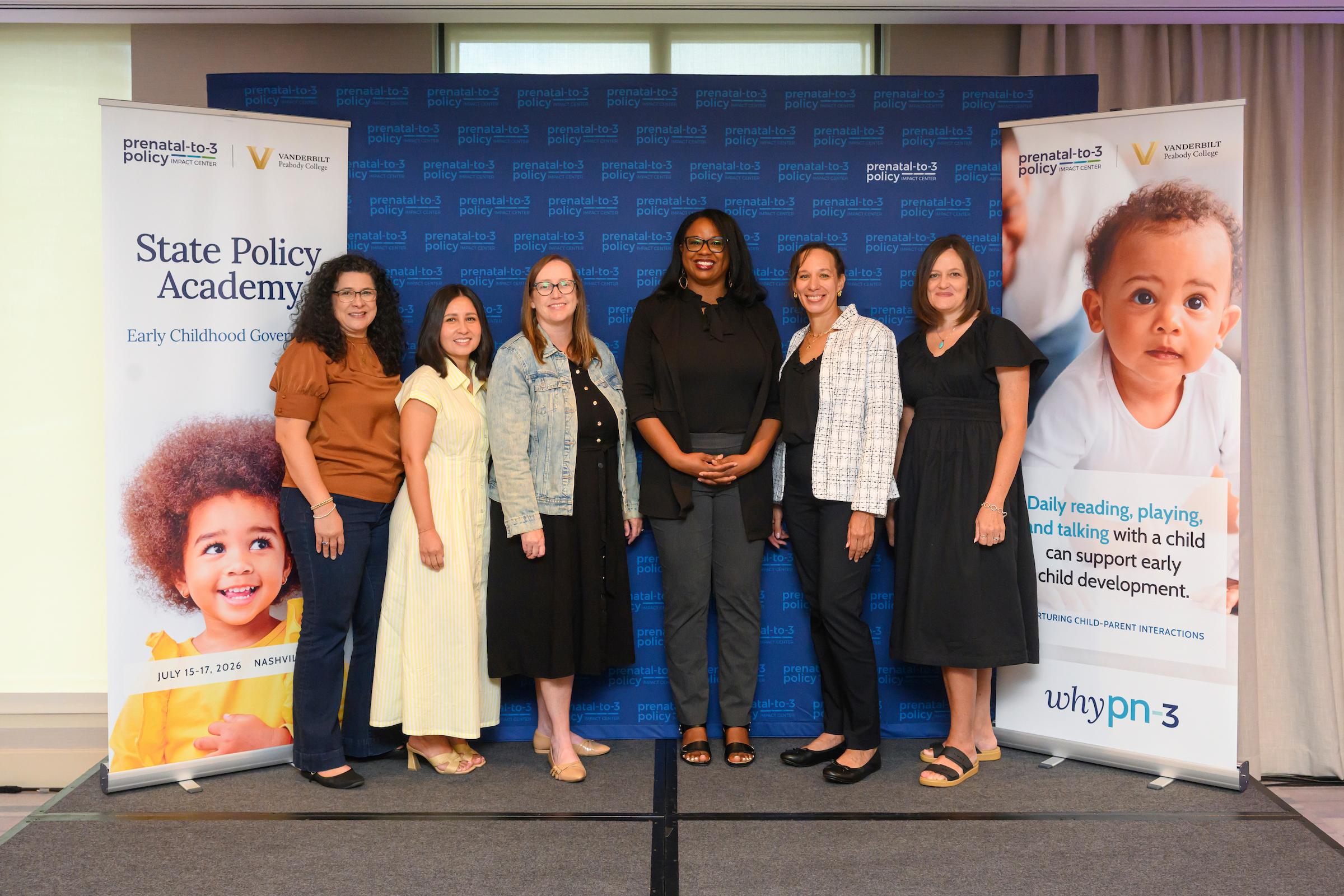
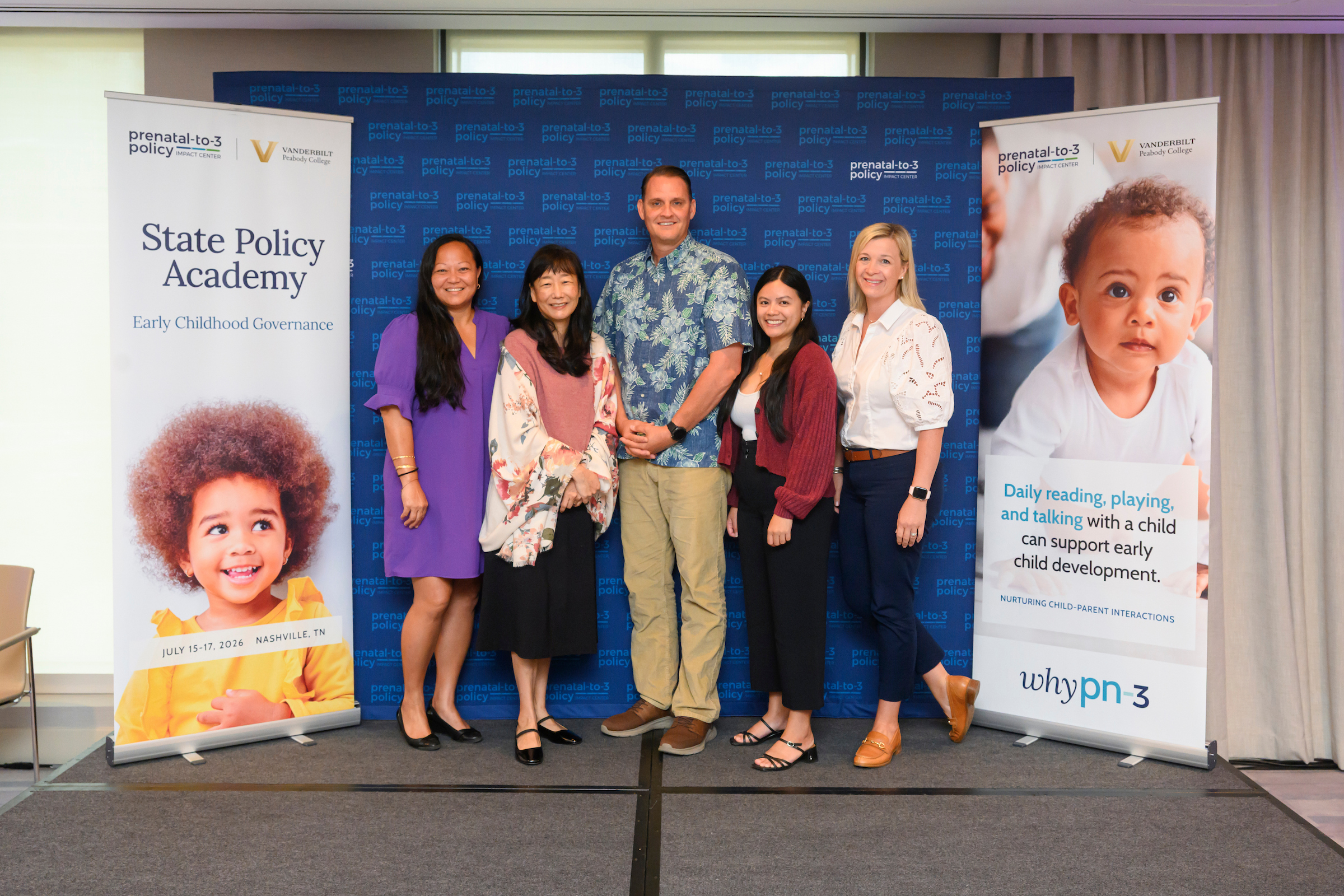
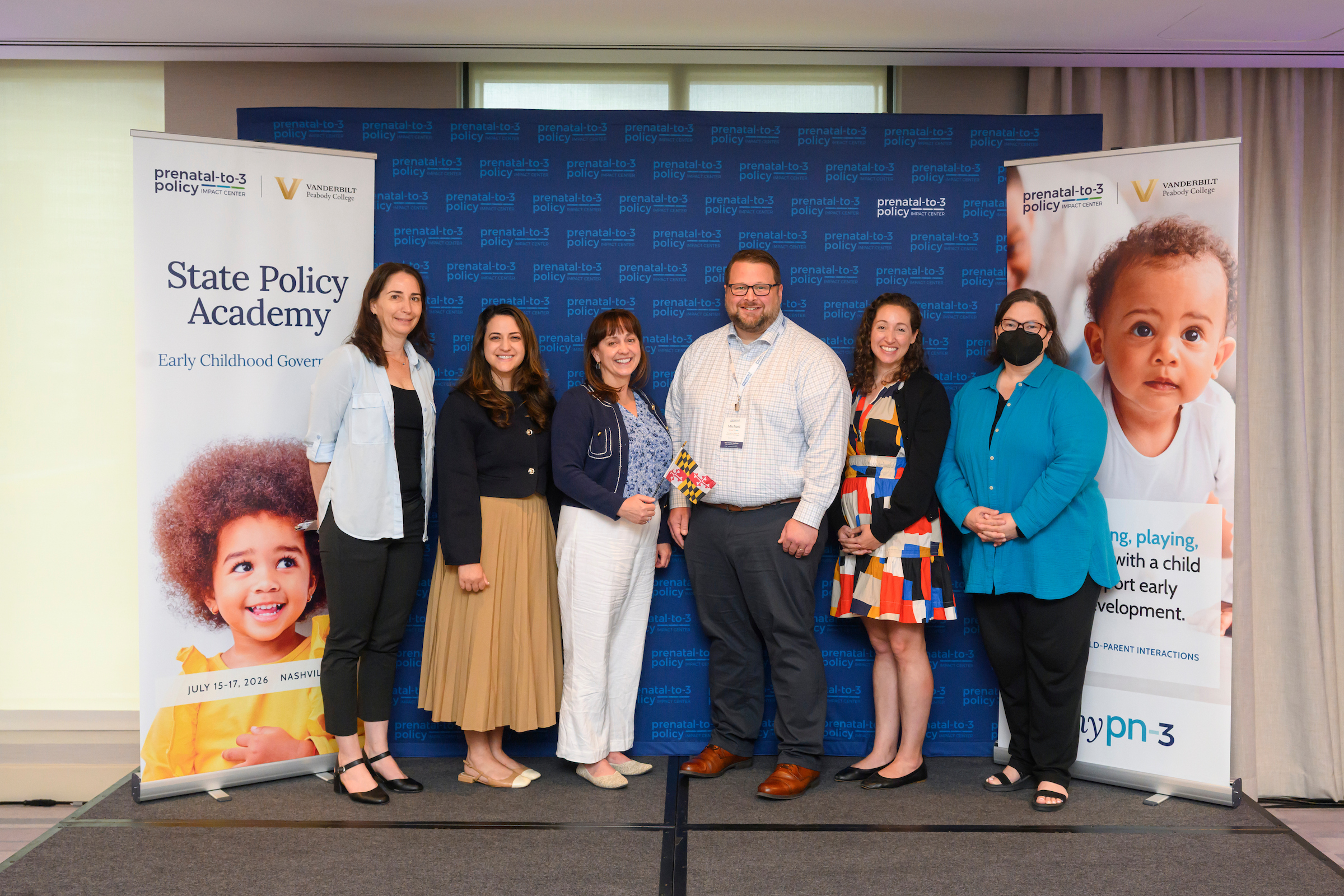
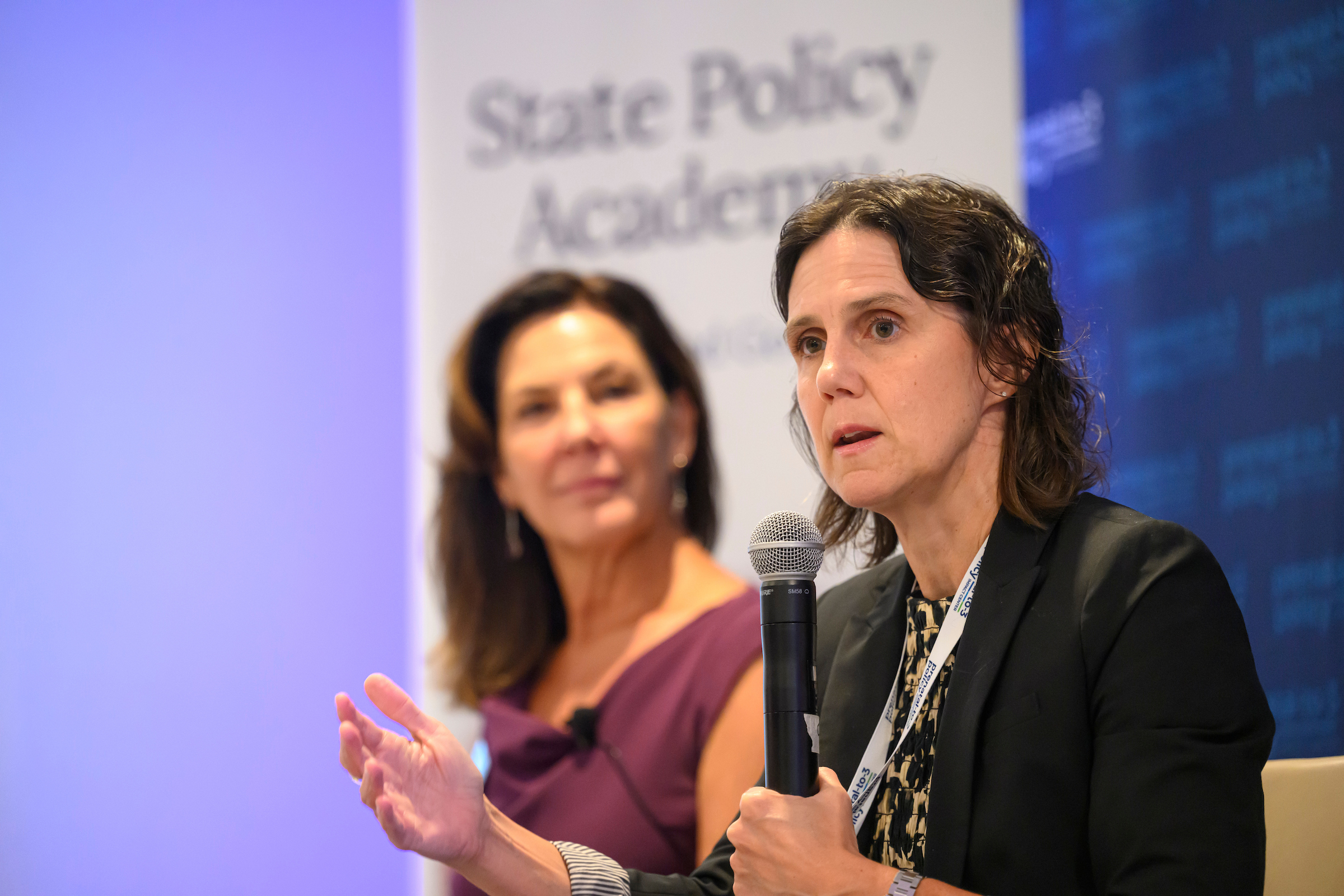
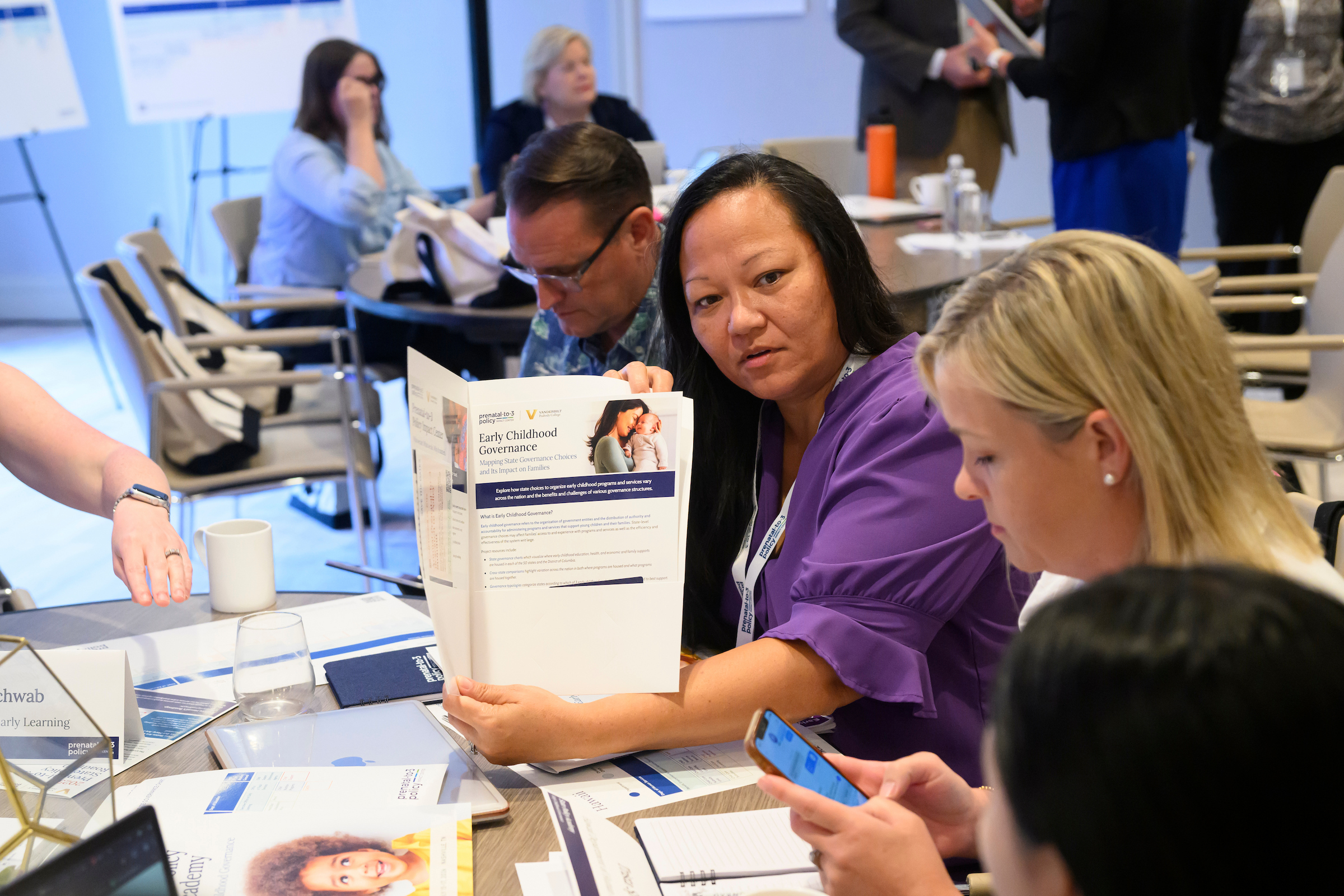
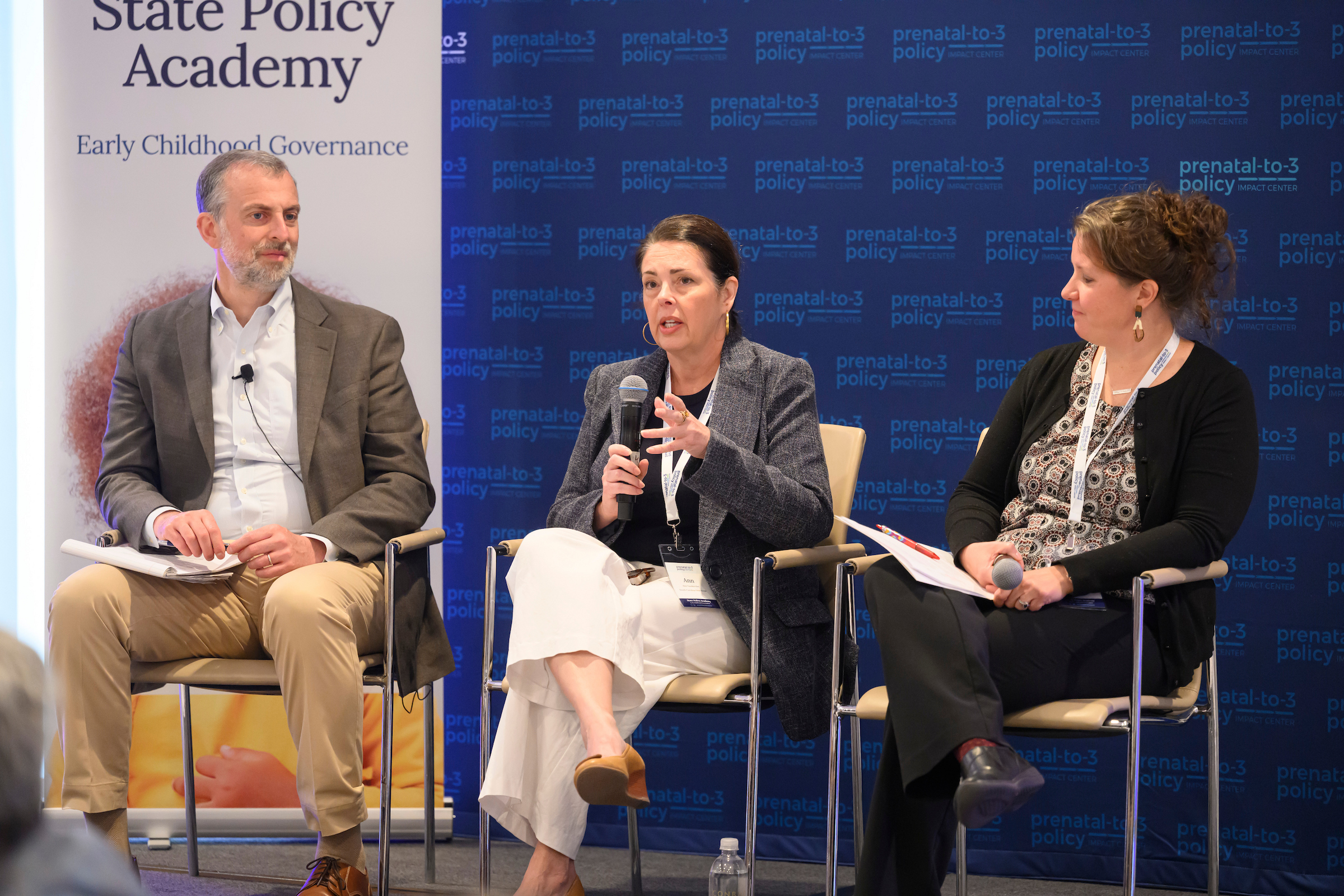
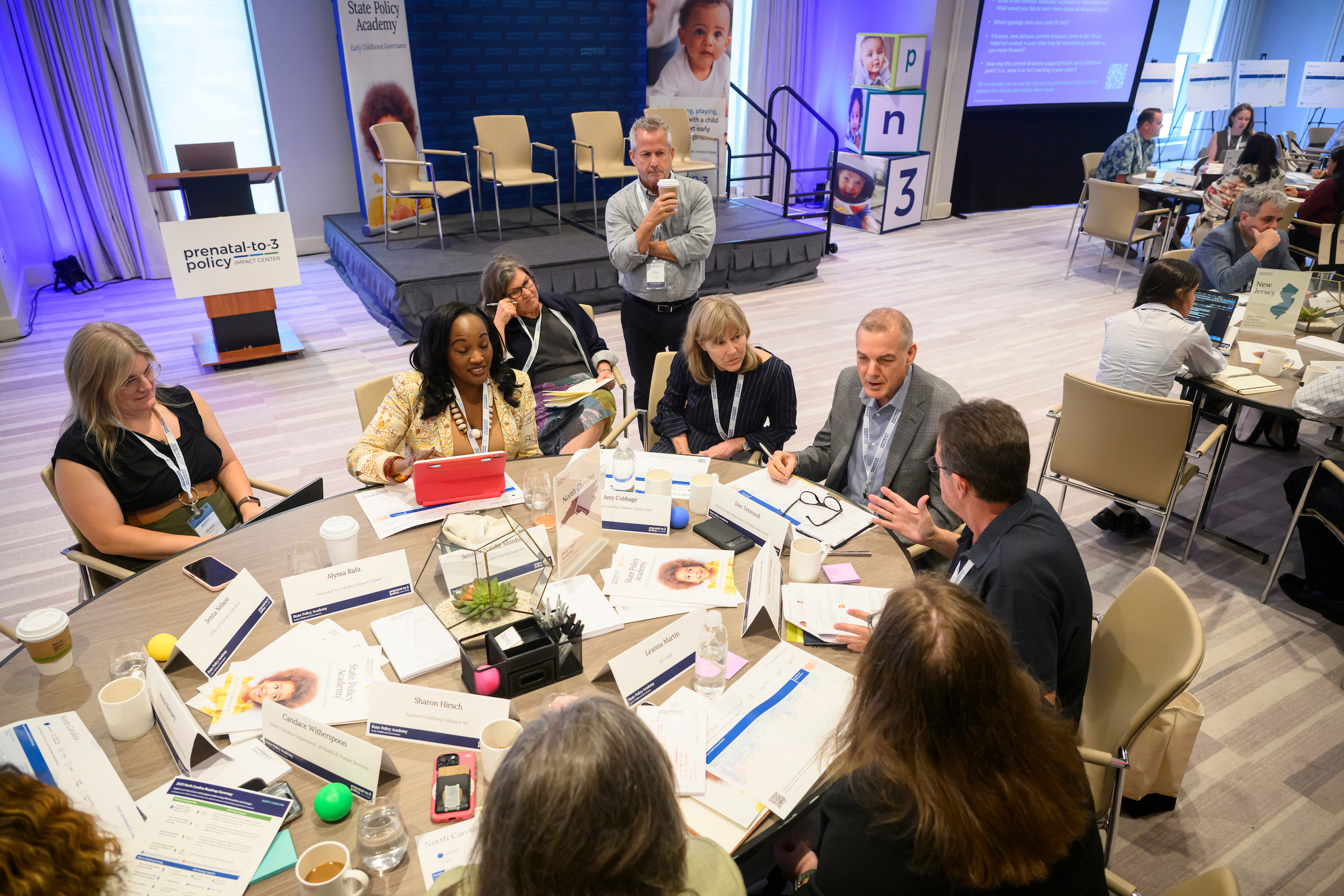
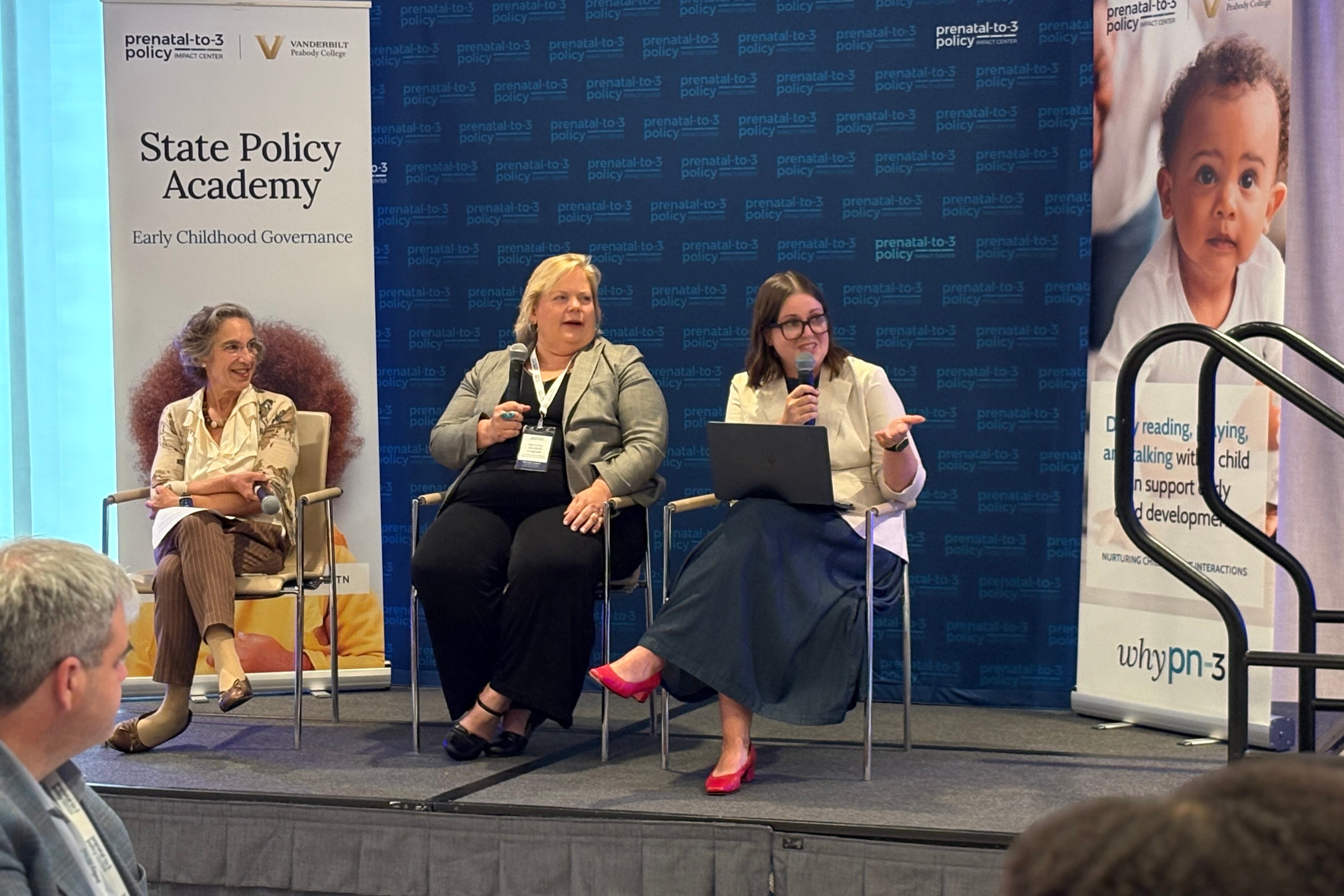
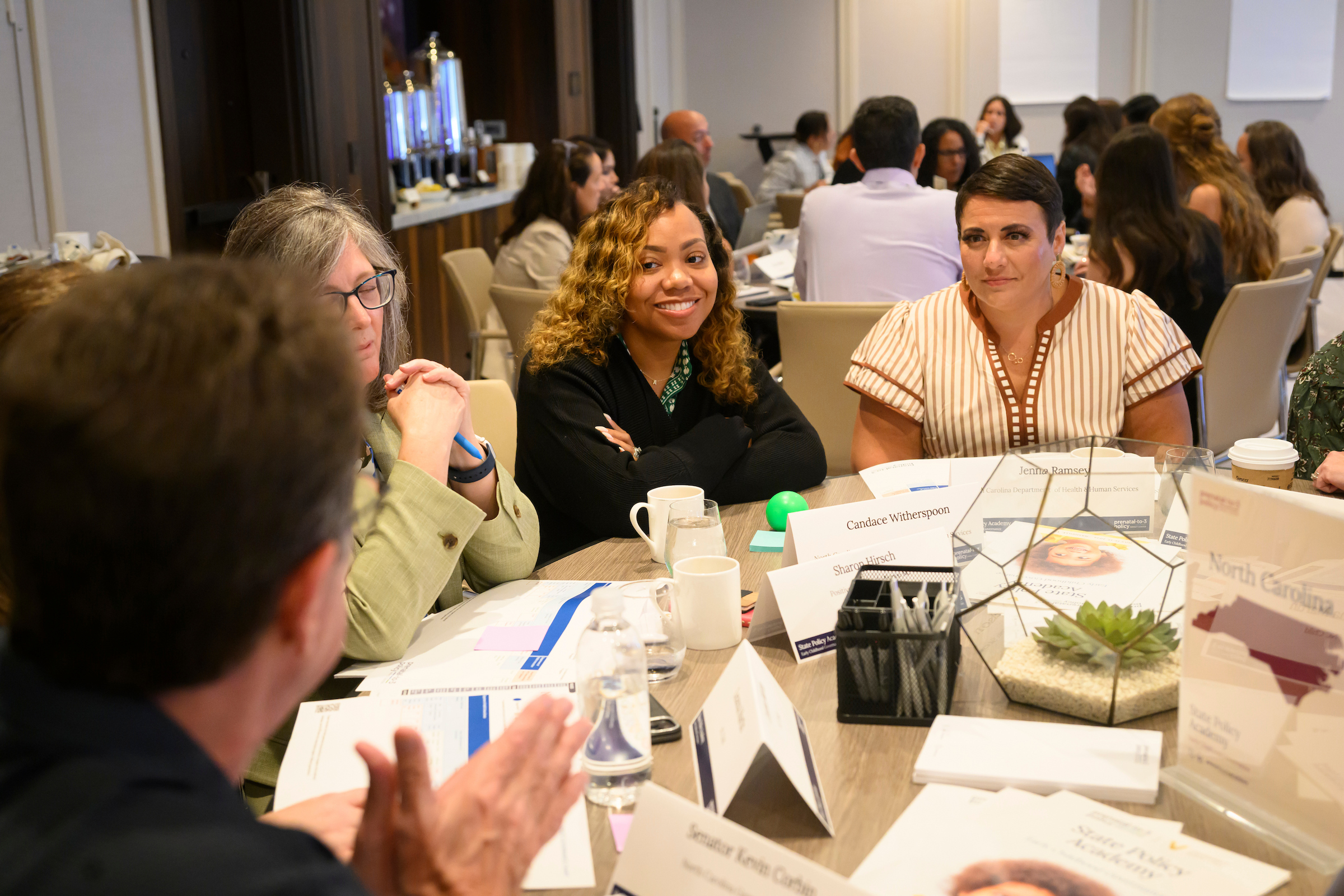
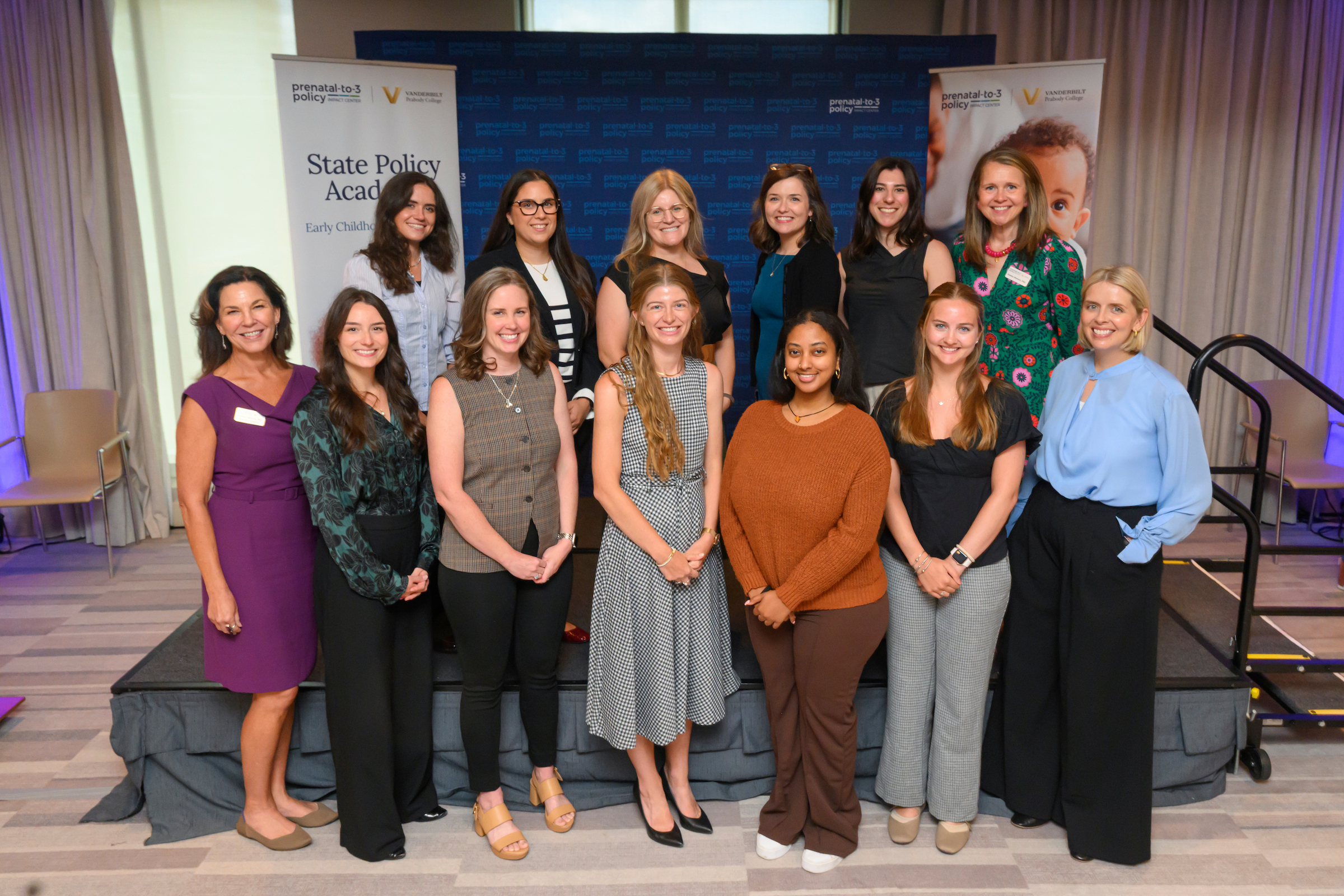
    Nashville, Tennessee – The Prenatal-to-3 Policy Impact Center at Vanderbilt University’s Peabody College hosted its State Policy Academy on Early Childhood Governance July 15-17, 2026, in Nashville. The academy brought together legislators, governor’s staff, and state agency leaders from eight states across the nation (AK, AZ, CA, HI, KY, MD, NC, and NJ), along with cross-sector partners from philanthropy, academia, and the nonprofit sector, to examine how governance structures can improve outcomes for children and families during the prenatal-to-3 period.

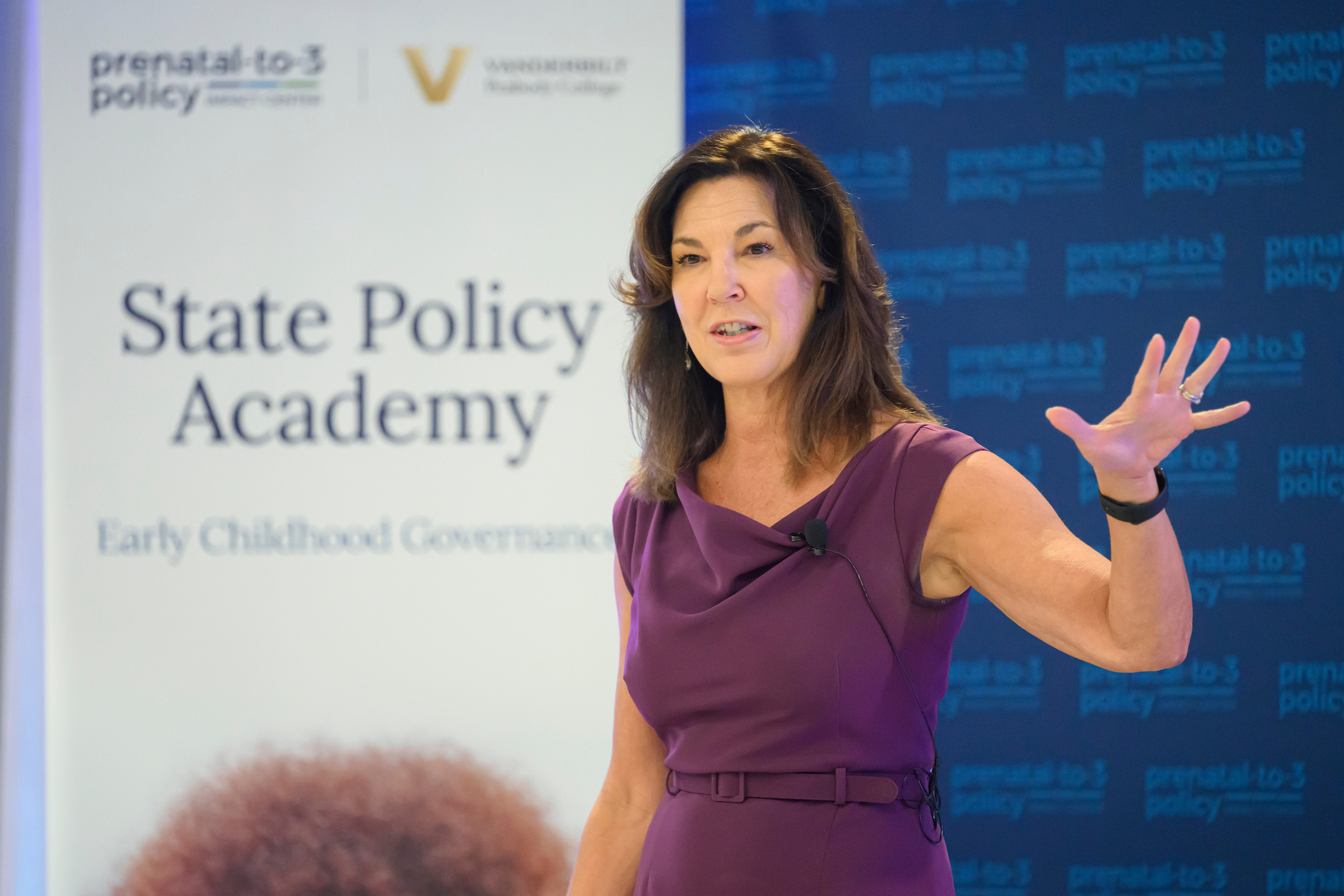
    “You only get one shot at being a baby. The brain is developed more in those first three years of life than in any other period."

    "Early childhood governance touches so many departments and agencies, and there is no one-size-fits-all model. This policy academy gave state leaders space to engage with key partners, share lessons learned, and identify ideas that may work best in their state.”

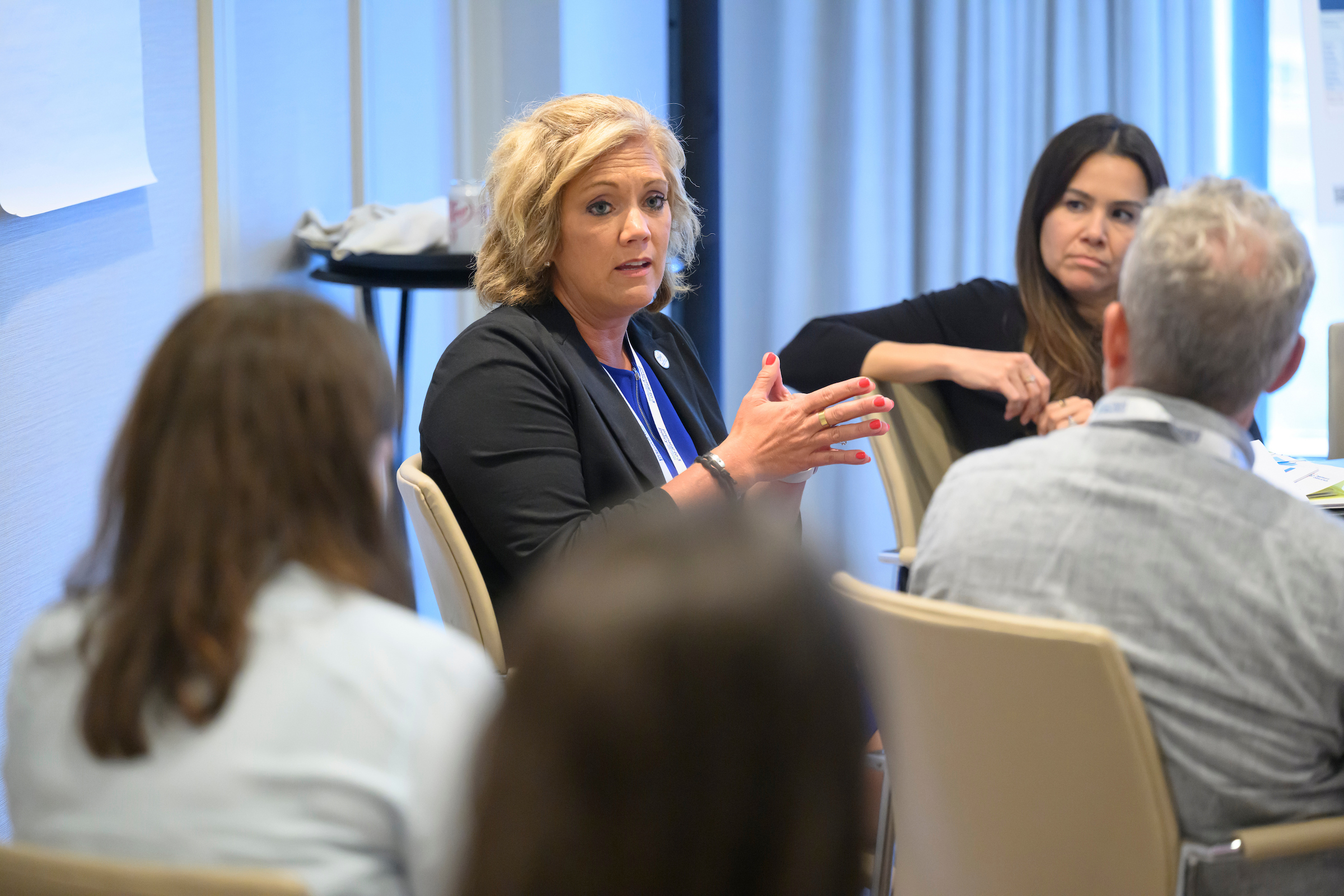
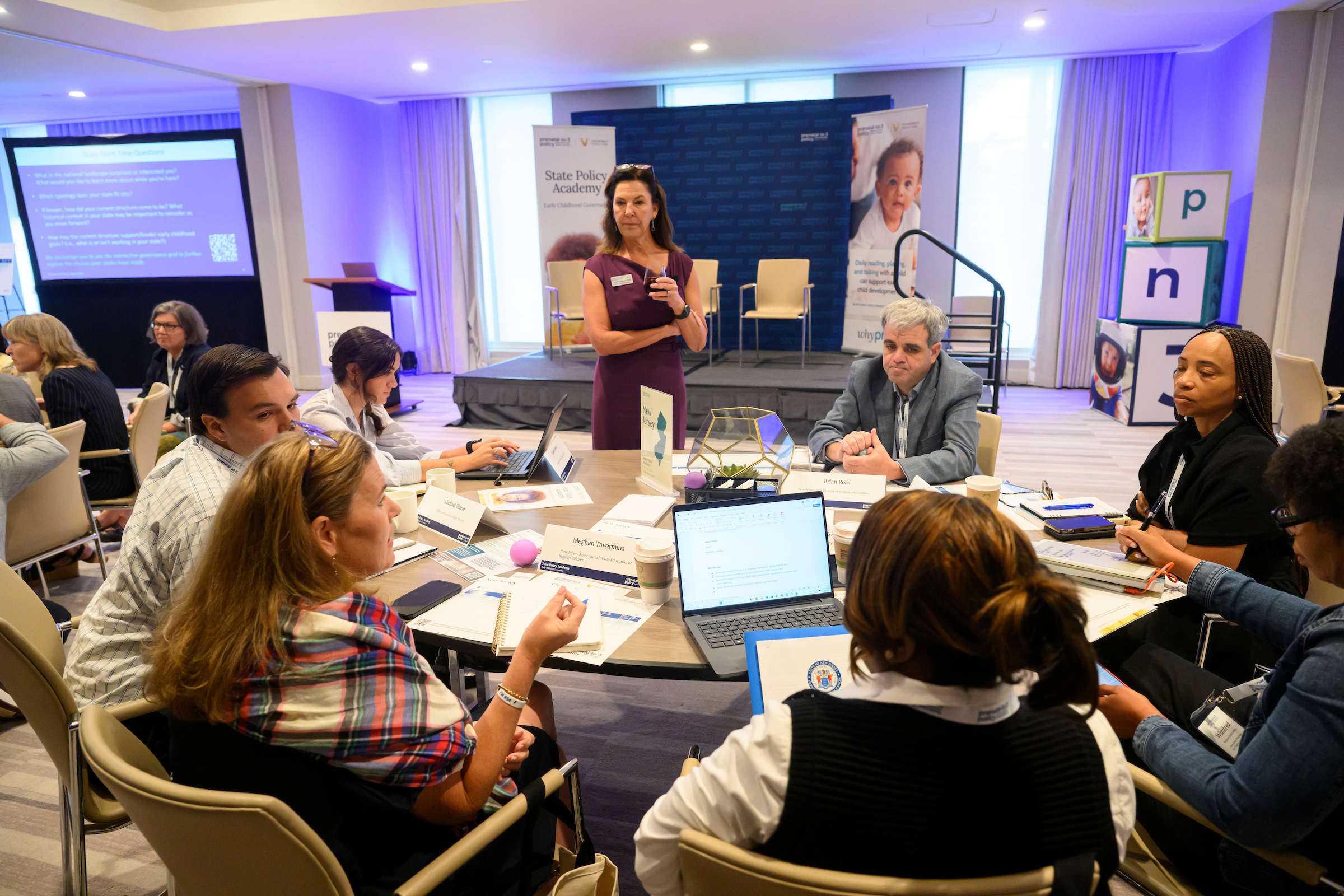
    The conversation moved from big-picture to actionable over the academy’s three days.

    The importance of meaningfully incorporating family perspectives was a consistent thread throughout the academy. During a session on national trends in governance, Harriet Dichter, lead consultant and director of the Early Childhood Governance and Finance Project, said families’ input “should be more than casual.” The theme carried through to the academy’s closing session on local-state partnerships, where state teams considered how family experience should shape governance choices. It was a reminder that ran through the academy: governance exists to serve the families and children it is designed to support, not the other way around.

    To date, 14 states have created a dedicated early childhood department. Panelists in a session on states that have consolidated their early childhood agencies pointed to focus and continuity as keys to lasting change. Kara Wente, Director of the Ohio Department of Children and Youth, credited Ohio’s progress to boiling its early childhood goals down to just three measurable priorities. “What you measure gets results,” she said. Elizabeth Groginsky, Cabinet Secretary for New Mexico’s Early Childhood Education and Care Department, added that states undergoing governance change should “make sure organization and individuals that were there [prior to implementation] still have a place in the conversation.”

    In a session on cross-department collaboration, Sara Gardner, Assistant Director at the University of Kansas Center for Public Partnerships and Research, said, “It’s really important to have a shared language, take the wins where you can get them, and work with the willing.” Ann Vandervliet, Executive Director of South Carolina First Steps, pointed to the value of “good will building where agencies at the table are equally committed to each other’s success.”

    State teams left the academy with a clearer sense of their next steps, though where each team stands varies widely. Some outlined immediate priorities, such as launching a task force to formally examine governance structures, breaking down silos across agencies, expanding family voice in decision-making, or building bipartisan support by educating legislators on early childhood systems. Others identified longer-term needs, including clearer data-sharing systems and stronger workforce capacity.

    “State teams left this academy with more than new ideas. They left with next steps and new relationships, both within their own states and with peers in other states facing similar challenges or already piloting solutions worth a closer look. Our job now is to help each team keep moving, at whatever pace fits their state."

    This academy would not have been possible without support from the Bezos Family Foundation. We also want to extend our gratitude to the Pritzker Children’s Initiative, the Hilton Foundation, the Esther A. & Joseph Klingenstein Fund, and the Valhalla Foundation. The Center thanks these partners for their continued investment in strengthening early childhood systems nationwide. 

    Policy Academy Funders

    About the Prenatal-to-3 Policy Impact Center 

    The Prenatal-to-3 Policy Impact Center is a nonpartisan research center at Vanderbilt University’s Peabody College of Education and Human Development that provides state leaders with clear, evidence-based policy solutions to improve the lives of young children and their families. For more information, visit pn3policy.org

    Press Contact

    Sydne Lewis, 615-343-9946, sydne.lewis@vanderbilt.edu

    Related

    PN-3 Research to Policy Summit Website Featured Image

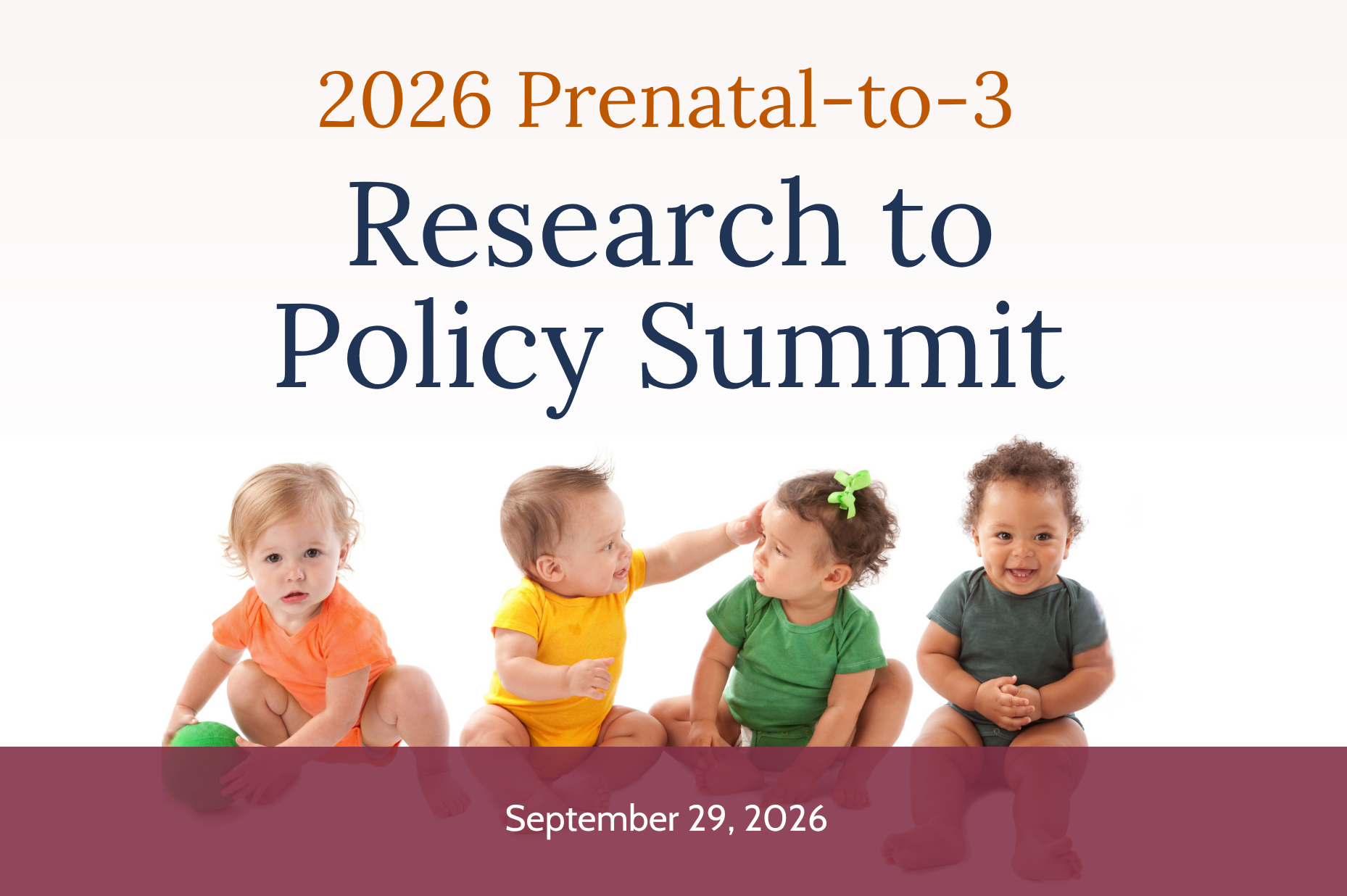
    2026 Prenatal-to-3 Research to Policy Summit​

    Join us September 29 to explore how the prenatal-to-3 policy landscape changed from 2016 to 2026.
    Join us September 29 to explore how the prenatal-to-3 policy landscape changed from 2016 to 2026.
    Baby held close to their mother's chest

    Effective Early Childhood Governance: Lessons Learned from Governance Change

    Governance change does not happen overnight, and states rarely accomplish it alone. Drawing on case studies of five states that consolidated their early childhood systems, a new brief from the Prenatal-to-3 Policy Impact Center identifies seven lessons learned, from sustained advocacy to strong, collaborative leadership, that can help state leaders pursue governance change reflecting their own early childhood goals.
    Governance change does not happen overnight, and states rarely accomplish it alone. Drawing on case studies of five states that consolidated their early childhood systems, a new brief from the Prenatal-to-3 Policy Impact Center identifies seven lessons learned, from sustained advocacy to strong, collaborative leadership, that can help state leaders pursue governance change reflecting their own early childhood goals.
    Little girl smiling

    Early Childhood Governance Typologies: Patterns in State Governance Across the Nation

    State choices in early childhood governance shape whether families can easily find, access, and use the services their children need. A new brief from the Prenatal-to-3 Policy Impact Center maps how all 50 states and the District of Columbia organize these systems, identifying three governance typologies (whole child, school readiness, and parents' workforce participation) to help leaders align governance structure with their early childhood goals.
    State choices in early childhood governance shape whether families can easily find, access, and use the services their children need. A new brief from the Prenatal-to-3 Policy Impact Center maps how all 50 states and the District of Columbia organize these systems, identifying three governance typologies (whole child, school readiness, and parents' workforce participation) to help leaders align governance structure with their early childhood goals.