Lorem ipsum dolor sit amet, consectetuer adipiscing elit, sed diam nonummy nibh euismod tincidunt. Learn More

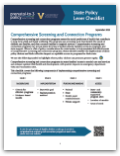
State Policy Lever Checklist: Paid Family Leave

PRINT

A paid family and medical leave policy of at least 12 weeks for birthing parents and at least 6 weeks for non-birthing parents with a new child is one of the most effective policies a state can implement to promote employment, increase parent-child bonding, and improve parent and child health.

Although all comprehensive state programs currently include family leave (encompassing both bonding and family caregiving leave provisions) and medical leave, this State Policy Lever Checklist primarily includes policy considerations for state leaders to help maximize the effectiveness of a state paid family leave for families with a new child. It also underscores the implications of these policy choices and their collective impact on equitable access to paid family leave for families in their state.

This checklist covers the following components of a paid family leave program:

  • Program characteristics
  • Eligibility criteria
  • Wage replacement
  • Administration and funding

State Policy Lever Checklist: Paid Family Leave

Related

Doula Supporting a Couple

State Approaches to Supporting the Community-Based Doula Workforce

Community-based doulas provide non-clinical emotional, physical, and informational support to expectant parents, starting during pregnancy and continuing throughout the postpartum period.
Happy toddler girl in yellow blouse

State Policy Academy: Early Childhood Governance

State approaches to early childhood governance vary widely — and those choices affect whether families can access the services they need. The State Policy Academy: Early Childhood Governance, explores how organizational decisions impact the effectiveness of programs and services for young children and their families.
A small child sits on a soft mat, focused on stacking colorful rings and holding a toy, while a caregiver engages nearby in a warm home setting

Renewed Support from the Buffett Early Childhood Fund Fuels Continued Growth and Impact at the Prenatal-to-3 Policy Impact Center

Funding will support policy research and evidence translation to inform state action and improve outcomes for young children and families As families navigate evolving social and economic challenges, advancing evidence-based policy solutions is critical. The