Lorem ipsum dolor sit amet, consectetuer adipiscing elit, sed diam nonummy nibh euismod tincidunt. Learn More

State Policies to Promote Infant and Early Childhood Mental Health

PRINT

Did you know state policies play an important role in promoting infant and early childhood mental health? 

Infant and early childhood mental health (IECMH) describes the capacity of a child leading to healthy social and emotional development, including the ability to form secure connections with adults and other children, manage a broad range of emotions, and learn from exploration of the child’s environment.

Although all the Roadmap policies impact the IECMH system in a broad context, four of these evidence-based policies—paid family and medical leave, higher state minimum wages, Early Head Start, and Early Intervention services—specifically promote positive outcomes for infants’ and toddlers’ mental health.

Learn more in this summary of the evidence. 

Explore how policies and programs can better support children's mental health.

Related

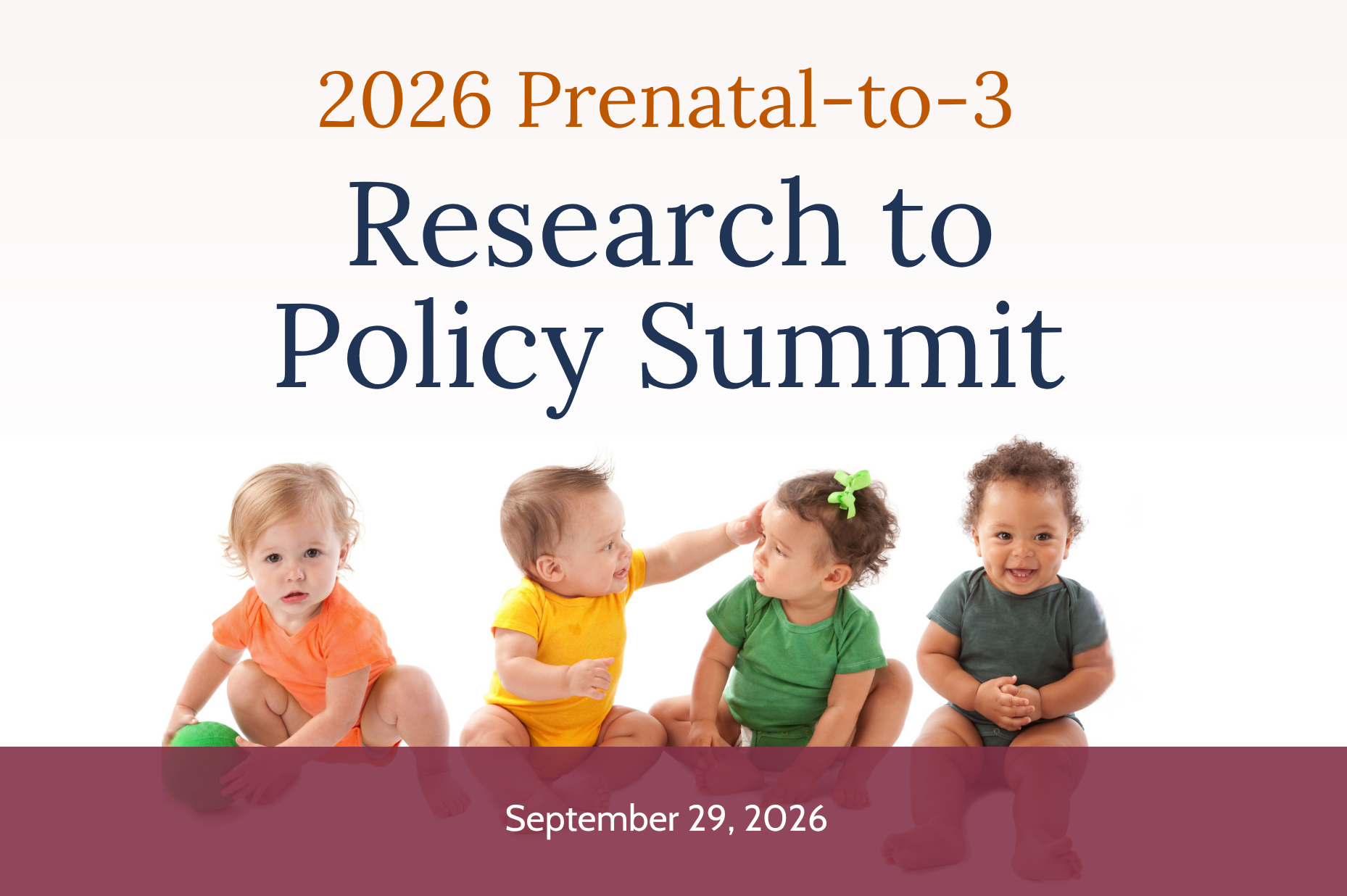
PN-3 Research to Policy Summit Website Featured Image

2026 Prenatal-to-3 Research to Policy Summit​

Join us September 29 to explore how the prenatal-to-3 policy landscape changed from 2016 to 2026.
Three individuals participate in a panel discussion at the State Policy Academy, with a backdrop featuring "prenatal-to-3 policy" and a child's image.

State Leaders Convene in Nashville for Prenatal-to-3 Policy Impact Center’s State Policy Academy on Early Childhood Governance

Three-day academy brought together state teams and national experts to examine how governance structures can improve outcomes for young children and families. Nashville, Tennessee – The Prenatal-to-3 Policy Impact Center at Vanderbilt University’s Peabody College
Baby held close to their mother's chest

Effective Early Childhood Governance: Lessons Learned from Governance Change

Governance change does not happen overnight, and states rarely accomplish it alone. Drawing on case studies of five states that consolidated their early childhood systems, a new brief from the Prenatal-to-3 Policy Impact Center identifies seven lessons learned, from sustained advocacy to strong, collaborative leadership, that can help state leaders pursue governance change reflecting their own early childhood goals.