
Community-based doulas are trained social service professionals who provide non-clinical emotional, physical, and informational support to expectant parents, starting during pregnancy and continuing throughout the postpartum period.
When integrated into a larger system of supports for expectant parents, community-based doulas can improve child health and development outcomes, parenting behaviors, and birth outcomes.
What are the Key Policy Levers to Support Community-Based Doulas?
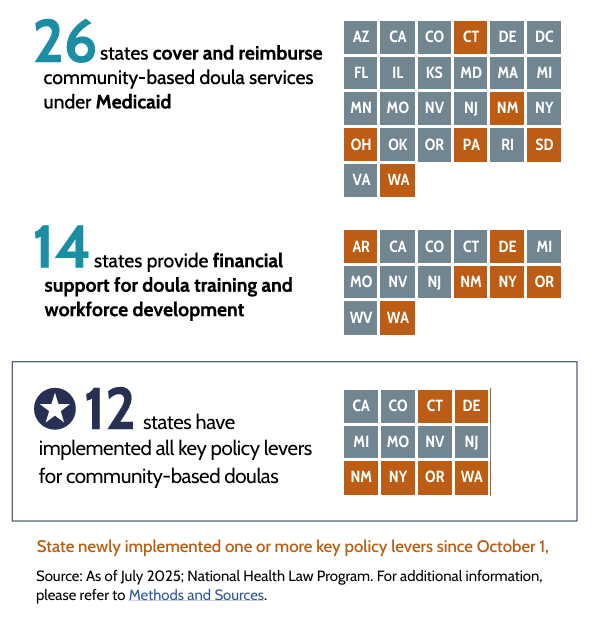
States’ policy choices to support community-based doulas can increase families’ access to doula care. We identified two key policy levers states may consider:
- Expand access and affordability of communitybased doula care by covering and reimbursing doula services under Medicaid. Community-based doula care can be out of reach for families with low incomes, but reimbursing services under Medicaid can decrease the costs associated with this service, thereby expanding access.
- Bolster a sustainable workforce by providing financial support for community-based doula training and workforce development. States can ease the financial burden of obtaining necessary trainings for both current and future doulas through scholarships, grants, and state-funded training opportunities.
How Do Community-Based Doula Policies Vary Across States?
Community-based doula policies vary across states on a few key policy components, including how states approach reimbursement rates, the number of covered services, and funding for workforce supports. Figure 1 illustrates the variation within Medicaid reimbursement rates for community-based doula care, which range from up to $930 in Maryland to up to $3,500 in Washington.

What Policy Progress Have States Made in the Last Year?
In the last year, 14 states introduced legislation to require Medicaid coverage of doula services and 8 states introduced legislation related to financial support for doula training and workforce development.
- 6 states (Connecticut, New Mexico, Ohio, Pennsylvania, South Dakota, and Washington) fully implemented Medicaid coverage for doula services through state plan amendments approved by the Centers for Medicare and Medicaid Services.
- Legislators in 6 states (Arkansas, Louisiana, Maine, Montana, Utah, and Vermont) enacted bills to require Medicaid coverage of doula services within the next year.
- Virginia legislators increased the number of doula visits covered by Medicaid from 8 to 10 total visits during the perinatal period.
- Oregon legislators increased the number of hours of doula care eligible for Medicaid reimbursement of 4 to 24.
- 6 states (Arkansas, Delaware, Missouri, New Mexico, New York, and Oregon) appropriated funding in Fiscal Year 2026 budgets for doula training, continuing education, and technical assistance.
The Community-Based Doula Policies Across States brief
Other Resources
For more information about state progress and variations in Community-Based Doula Policies, visit our 2025 Roadmap profile
About the Data
Source: As of September 2025. National Health Law Program, Doula Medicaid Project, state legislation, and approved state plan amendments. For additional information see Method and Sources.