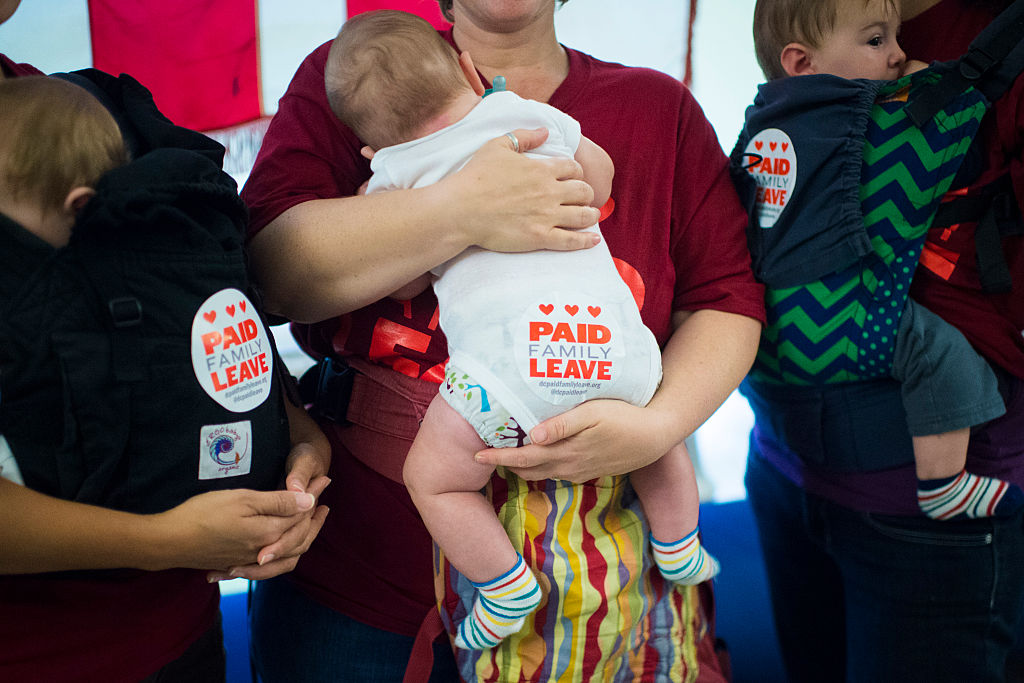
In North Texas, child care providers already serving subsidized families are willing to serve more; yet, thousands of families remain waitlisted.
Child care is one of the highest expenses families with young children face, often exceeding the cost of housing or college costs.1,2 Child care subsidy programs help offset these costs and make child care more affordable for families with low incomes, and support parents’ ability to work or pursue education. Still, limited funding to the subsidy program means many eligible families remain on long waitlists and go without child care tuition assistance, forcing difficult choices about work and child care arrangements.3,4,5 Participation and Quality Ratings. In Texas, subsidy participation is tied to the state’s quality rating system. To receive a Texas Rising Star (TRS) rating, child care programs must serve children whose families use subsidies, and families using subsidies must choose a TRS-rated program.
The effectiveness of the subsidy system depends on two factors: the amount of public funding available and the number of providers willing and able to participate. Expanding state and federal funds without sufficient provider capacity could still leave families on long waitlists for child care. Across states, providers weigh several factors when deciding whether to accept subsidies, including state-set reimbursement rates, administrative burden, and quality rating or monitoring requirements.6,7 In Texas, these considerations unfold through the state’s reimbursement structure (see box below).
Participation and Quality Ratings
In Texas, subsidy participation is tied to the state’s quality rating system. To receive a Texas Rising Star (TRS) rating, child care programs must serve children whose families use subsidies, and families using subsidies must choose a TRS-rated program.
Reimbursement Rates
As of 2025, subsidy reimbursement rates in Texas are set at the 75th percentile of the market rate.
Waitlist Pressure
Demand for subsidies far outpaces supply. As of late 2024, more than 95,000 children remain on the subsidy waitlist statewide, including roughly 36,000 in North Texas.8The majority of child care providers serving subsidized families show readiness to enroll more
Subsidy-accepting programs are prevalent and serve a distinct role in North Texas’s child care system (see box, Subsidy Participation Snapshot: North Texas). Approximately two-thirds (65%) of surveyed programs report serving families who use subsidies to access child care. Among those programs, an estimated one-third (31%) of total enrollment consists of children whose families rely on subsidies to access care.
Most providers who serve subsidized families expressed a willingness to serve more. Approximately 9 in 10 providers who already serve subsidized families said they would enroll additional children using subsidies, regardless of age group. This readiness suggests that, with additional public funding, the region’s existing subsidy-accepting providers could serve more children as families move off the waitlist and into care.
For many families with low incomes, the cost of child care would consume such a sizable share of household income that, without a subsidy, child care would simply be unaffordable. Without access to child care, many parents cannot work; for these families, subsidized child care is the only viable path for stable employment.
Providers, meanwhile, operate on thin profit margins, leaving child care programs highly sensitive to fluctuations in children’s enrollment and educator staffing.9 Optimally, subsidies can act as a stabilizer, providing predictable revenue that helps programs manage costs and retain staff. However, the stabilizing potential erodes when reimbursement rates fall short of actual program expenses for providing the true cost of care or when long waitlists restrict families’ access to care. Providers and families depend on a subsidy system that not only expands access to child care but also sustains the fragile economics of the child care system itself.
Subsidy Participation Snapshot: North Texas
48%
21%
of occupied child care slots are filled by children whose families use subsidies to access care across North Texas
Conclusion
The effectiveness of the child care subsidy system is dependent on whether there are enough funded subsidies for eligible families and whether enough providers are willing to enroll subsidized families.
In North Texas, provider willingness is not the limiting factor. Most subsidy-accepting programs stand ready to expand enrollment for children whose families use subsidies if funding were available. But the broader child care system remains economically fragile, burdening families with high tuition and the early childhood workforce with low pay. Strengthening the subsidy system will require attention to both sides of the equation: additional funding to expand access for eligible families, and supporting efforts to make provider participation financially sustainable through adequate reimbursement rates and reliable payments.
The Subsidized Child Care brief
Other Resources
The full North Texas Study report
Other briefs from the North Texas Study
About The Data
Findings from this brief are based on the 2024 North Texas Child Care Director Survey, conducted by the Prenatal-to-3 Policy Impact Center at Vanderbilt University in partnership with Child Care Associates between November 2024 and January 2025. Subsidy participation and characteristics data were collected from 558 child care program directors. Responses from child care providers were analyzed alongside state licensing data and data from the US Census Bureau’s American Community Survey (ACS) to calculate estimates for the region’s population of 3,108 child care programs. Population-level estimates of available child care slots were calculated from these data sources to approximate current capacity across the region. For the full report, see https:// pn3policy.org/the-north-texas-child-care-workforce-study.
Brief authored by Cynthia Osborne, PhD and Monica Navarro
Suggested citation: Prenatal-to-3 Policy Impact Center (2026). Willing Providers, Waiting Families: Subsidized Child Care in North Texas. https://pn3policy.org
Citations
1 First Five Years Fund. (2024). In context: Child care costs surpass other major family expenses. Retrieved November 2025, from https://www.ffyf.org/resources/2024/01/in-context-child-care-costs-surpass-other-major-family-expenses/
2 Center for American Progress. (2019). Child care expenses push an estimated 134,000 families into poverty each year. Retrieved November 2025, from https://www.americanprogress.org/article/child-care-expenses-push-an-estimated-134000families-into-poverty-each-year/
3 Forry ND, Hofferth SL. Maintaining Work: The Influence of Child Care Subsidies on Child Care-Related Work Disruptions. J Fam Issues. 2011 Mar;32(3):346-368. doi: 10.1177/0192513X10384467. PMID: 22194641; PMCID: PMC3242446.
4 Ha, Y., & Miller, D. P. (2015). Child care subsidies and employment outcomes of low-income families. Children and Youth Services Review, 59, 139-148.
5 Prenatal-to-3 Policy Impact Center. (2024). Prenatal-to-3 policy clearinghouse evidence review: Child care subsidies. Peabody College of Education and Human Development, Vanderbilt University. https://pn3policy.org/policy-clearinghouse/child-care-subsidies 6 Rohacek, M., & Adams, G. (2017). Providers in the child care subsidy system. Urban Institute.
7 Schneider, K. G., Joshi, P., & Ha, Y. (2021). An examination of child care provider participation in state subsidy contract systems. Children and Youth Services Review, 127, 106099.
8 Texas Workforce Commission. (n.d.). Child Care by the Numbers. Retrieved April 2025, from https://www.twc.texas.gov/data-reports/child-care-numbers
9 Prenatal-to-3 Policy Impact Center (2025). Child Care: From Market Failure to Strategic Investment. https://pn3policy.org