
Lorem ipsum dolor sit amet, consectetuer adipiscing elit, sed diam nonummy nibh euismod tincidunt. Learn More

Our Team

Abby Lane, PhD

Policy Director

Abby is the Policy Director at the Prenatal-to-3 Policy Impact Center at Vanderbilt University. She leads a team of policy analysts and researchers and oversees the team’s work conducting comprehensive reviews of the evidence on state-level prenatal-to-3 policies and tracking the development, adoption, and implementation of these policies, including their potential to promote equity. She also oversees the production of the annual Prenatal-to-3 State Policy Roadmap.

With over a decade of experience in policy research, Abby’s work is focused in the areas of social, family, and early childhood policy, with a deeper background in early care and education policy. Her dissertation research focused on the intersection of nonstandard and unpredictable work schedules, child care, and maternal well-being, supported by a Child Care Research Scholar Dissertation Grant from the U.S. Office of Planning, Research and Evaluation in the Administration for Children and Families. Abby previously worked at the University of Texas at Austin and the National Women’s Law Center.

Abby holds a Ph.D. in public policy from the University of Texas at Austin. She also holds an M.P.P. from The George Washington University and a B.A. in political science from St. Olaf College. She lives in the Kansas City area with her husband and two young daughters. In her spare time, Abby enjoys engaging in an annual book-reading competition with close friends.


Authored Content

Baby held close to their mother's chest

Effective Early Childhood Governance: Lessons Learned from Governance Change

Governance change does not happen overnight, and states rarely accomplish it alone. Drawing on case studies of five states that consolidated their early childhood systems, a new brief from the Prenatal-to-3 Policy Impact Center identifies seven lessons learned, from sustained advocacy to strong, collaborative leadership, that can help state leaders pursue governance change reflecting their own early childhood goals.
Little girl smiling

Early Childhood Governance Typologies: Patterns in State Governance Across the Nation

State choices in early childhood governance shape whether families can easily find, access, and use the services their children need. A new brief from the Prenatal-to-3 Policy Impact Center maps how all 50 states and the District of Columbia organize these systems, identifying three governance typologies (whole child, school readiness, and parents' workforce participation) to help leaders align governance structure with their early childhood goals.
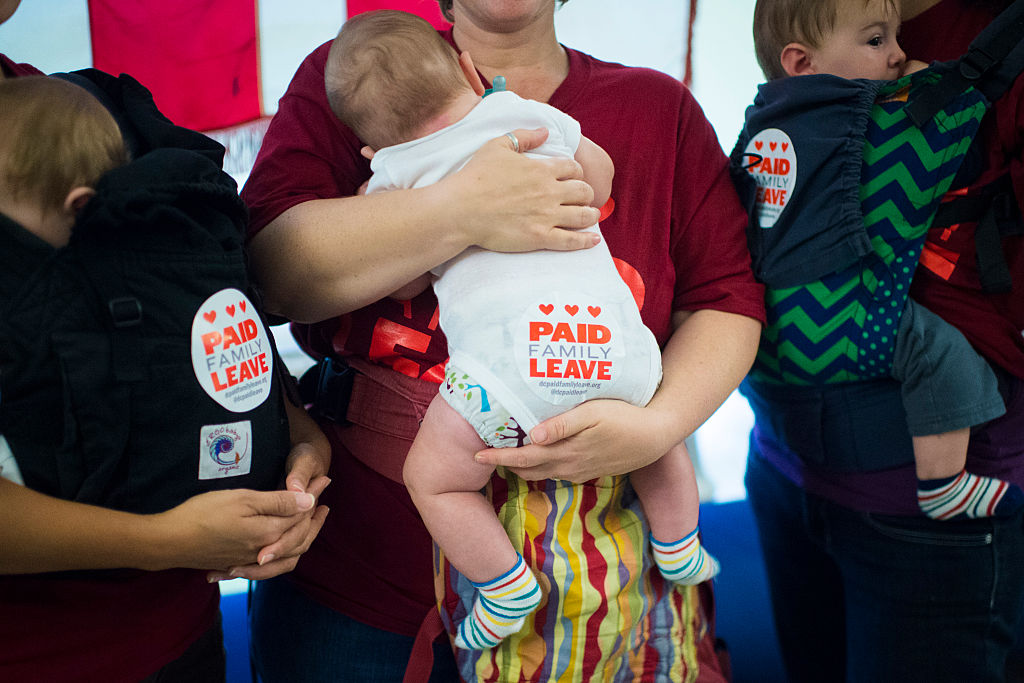
Parent with child showing “Paid Family Leave” campaign sticker. (Source: The Washington Post, Getty Images)

How Did We Get Here? The History of Paid Leave Policies

As more and more states explore paid leave policies, leaders have the opportunity to design these policies in more equitable ways—which begs the question: how did we get here?